
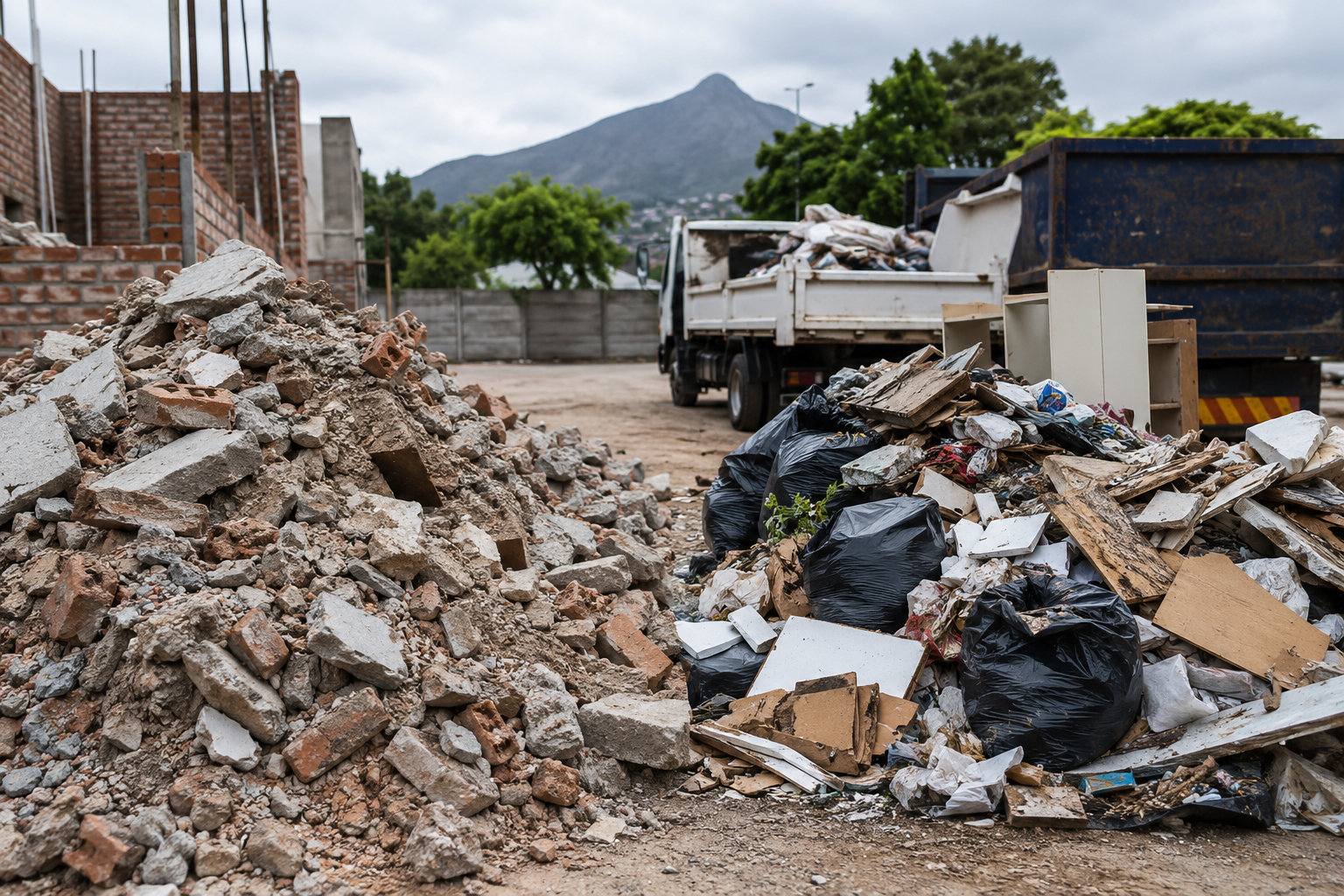
If you’ve ever requested a quote for waste removal, you may have noticed that the type of waste you need removed can significantly affect the final price. Many people assume that all waste is charged the same, only to discover that builders rubble and mixed waste are priced differently.
Understanding the difference between these two waste types can help you budget more accurately and choose the right removal service for your project. It also helps you avoid unexpected costs when requesting a quote.
Whether you’re renovating your home, cleaning out a property, or managing a construction site, knowing what qualifies as builders rubble and what is considered mixed waste will make the removal process much smoother.
Get Expert Advice and a Fast Quote
Not sure whether your waste is classified as builders rubble or mixed waste? Complete the form below and our team will help you identify the right service while providing a fast, no-obligation quote.
What Is Builders Rubble?
Builders rubble is waste produced during construction, renovation, demolition, and building maintenance projects. These materials are generally heavy, dense, and require specialised handling because of their weight.
Common examples of builders rubble include:
- Broken bricks
- Concrete
- Cement
- Sand
- Tiles
- Stones
- Rubble from demolished walls
- Paving slabs
Because these materials are much heavier than ordinary household waste, they place greater strain on vehicles and require more labour to load and transport. Disposal facilities also charge differently depending on the type and weight of the material being delivered.
For this reason, builders rubble removal often costs more than people expect, especially when large quantities of concrete or bricks are involved.
Another important point is that clean builders rubble is often easier to dispose of than mixed loads. When rubble consists only of construction materials without being mixed with household rubbish or garden waste, it is generally quicker to sort and unload.
This is why keeping builders rubble separate during a renovation can sometimes save both time and money.
What Is Mixed Waste?
Mixed waste refers to loads containing different types of waste combined together instead of being separated.
A mixed waste load may include:
- Household rubbish
- Garden refuse
- Wood
- Cardboard
- Plastic
- Old furniture
- Packaging
- Small amounts of builders rubble
These loads often require additional sorting before disposal because different materials may need to be separated for recycling or disposed of at different facilities.
Although mixed waste is not always as heavy as builders rubble, it often requires more handling. This additional labour can influence the overall removal cost.
For example, clearing out a garage or a property after a tenant moves out usually produces mixed waste rather than builders rubble. Likewise, a home clean-up after several years of accumulated clutter often results in a combination of recyclable materials, household waste, and unwanted furniture.
Get Professional Advice and a No-Obligation Quote
Whether you’re dealing with builders rubble, mixed waste, or a combination of both, our team can recommend the best solution for your project. Complete the form below for expert advice and a fast, competitive quote.
Which One Usually Costs More?
There is no single answer because every job is different, but in many cases, builders rubble costs more to remove because of its weight.
Materials such as concrete, bricks, paving, and sand are extremely heavy. Even a relatively small pile can weigh significantly more than a much larger pile of mixed household waste. Since transport vehicles have weight limits, heavier loads may require additional trips or specialised equipment.
However, mixed waste can also become expensive if it requires extensive sorting or contains bulky items that are difficult to load.
The overall cost depends on several factors, including:
- The weight of the waste
- The total volume
- Ease of access
- Labour required
- Loading time
- Disposal fees
- Distance to disposal facilities
Rather than focusing only on the type of waste, professional removal companies usually assess the entire job before providing a quotation.
This ensures the price accurately reflects the amount of work involved.
Can You Reduce Your Waste Removal Costs?
Yes. A little preparation can often make the removal process more efficient.
If possible, separate builders rubble from household waste before collection. This makes loading easier and helps avoid unnecessary sorting later.
Keeping waste in accessible areas also reduces labour time. If the team can park close to the waste, the job can often be completed more quickly than if materials need to be carried long distances.
If you’re renovating over several weeks, it may also be worth collecting all your builders rubble before arranging removal. Larger planned collections are often more efficient than arranging multiple smaller visits.
Another helpful tip is to avoid mixing hazardous materials with general waste. Items such as paint, chemicals, batteries, or asbestos require specialised handling and should always be disclosed before collection.
Finally, request a quote that accurately describes the type and amount of waste you have. Providing clear information allows the removal company to recommend the right vehicle, equipment, and team for the job.
Final Thoughts
Builders rubble and mixed waste may both need to be removed, but they are handled differently and can have different pricing structures.
Builders rubble is generally heavier and often costs more because of the weight involved, while mixed waste may require additional sorting depending on its contents. The most cost-effective approach is to understand what type of waste you have and keep materials separated whenever possible.
If you’re unsure how your waste will be classified, speaking to a professional removal company is the easiest way to get accurate advice and an obligation-free quote. With the right guidance, you can choose the most suitable service, manage your project more efficiently, and avoid unexpected costs.
Need Help Identifying Your Waste?
Tell us about your project and we’ll help you determine the most suitable removal service before providing a competitive quote.