
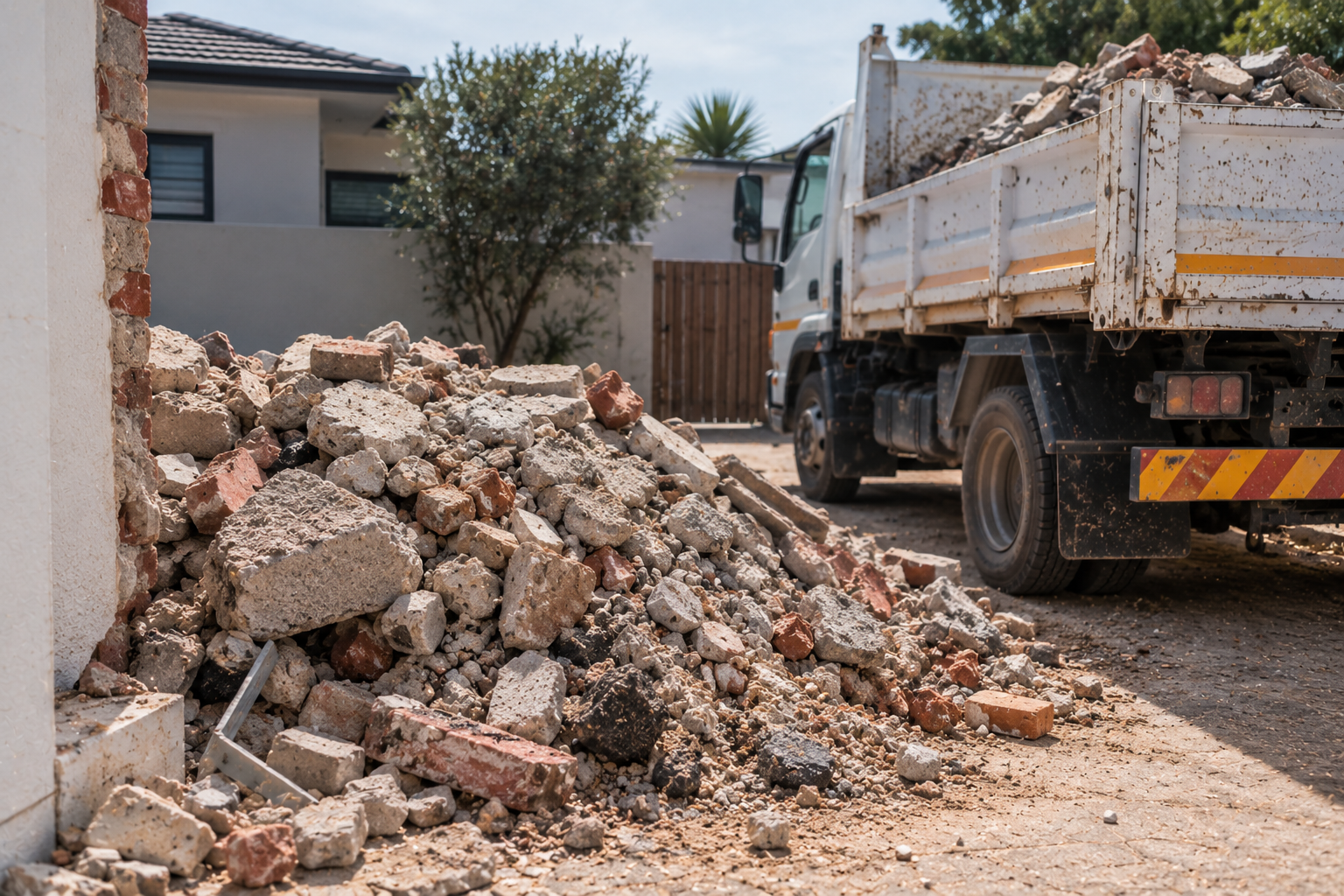
If you have recently renovated a kitchen, removed a wall, replaced old paving or carried out building work, you may suddenly find yourself with a pile of broken bricks, concrete, sand and other construction waste.
But what actually counts as builders rubble?
It is a useful question to ask before arranging collection because not every type of waste produced during a renovation or construction project should automatically be treated as builders rubble. Separating suitable rubble from other waste can make disposal easier, help you understand what needs to be collected and prevent unsuitable materials from being mixed into a load.
In Cape Town, the distinction is particularly relevant because the City has specific requirements around clean builders rubble and the materials accepted at its disposal and drop-off facilities. The City identifies materials such as concrete, broken bricks, sand, stone, soil, cement and plaster as examples of clean builders rubble, while contaminated loads can contain materials such as wood, plastic, paper, metal, glass, electrical wires and hazardous materials.
Whether you are a homeowner, contractor or property manager, knowing what you actually have on your property is the first step towards arranging the right type of rubble disposal.
Get Your Builders Rubble Removed
Request a quote from Adriel Rubble Removal for reliable collection and disposal of builders rubble in Cape Town.
What Is Builders Rubble?
Builders rubble is waste material produced during construction, demolition, renovation, alteration or repair work.
It is generally made up of hard, inert materials that are left behind when something is built, removed or broken apart.
A simple example would be demolishing an old brick wall. Once the wall is removed, you may be left with broken bricks, pieces of cement, sand and plaster. Those materials would typically form part of a builders rubble load.
The same applies to many other home improvement projects. Removing old paving, breaking up a concrete slab, replacing tiles or taking down part of a structure can all produce rubble that needs to be cleared from the property.
The important point is that builders rubble is not simply “anything left over from a building project”. The composition of the waste matters.
What Materials Usually Count as Builders Rubble?
Clean builders rubble generally consists of construction materials that can be handled and disposed of as a relatively clean, inert waste stream.
Common examples include:
- Broken bricks
- Concrete
- Sand
- Stone
- Soil
- Cement
- Plaster
- Other similar mineral-based construction materials
The City of Cape Town’s published guidance specifically identifies concrete chunks, broken clay or cement bricks, sand, stone, soil, cement and plaster as clean builders rubble.
This makes the definition easier to understand in practical terms. If you have demolished a brick wall and are left with a pile of bricks and mortar, that is a typical example. If you have broken up an old concrete pathway, the resulting concrete pieces would also generally fall into this category.
What Is Clean Builders Rubble?
The word “clean” is important.
Clean builders rubble is construction waste that has been kept separate from other materials that could contaminate the load.
For example, imagine you have demolished a small outbuilding. You may have bricks, concrete and plaster mixed together. If these materials are free from other waste such as plastic, wood, metal and hazardous materials, they can form a relatively clean rubble load.
However, if the same pile also contains timber, electrical cables, plastic packaging and household rubbish, it is no longer simply a clean builders rubble load.
This distinction matters because disposal facilities can have different requirements for different waste streams. The City of Cape Town states that clean builders rubble is accepted at various facilities, while its guidance also distinguishes clean rubble from contaminated material.
What Does Not Count as Clean Builders Rubble?
Renovations often produce several different types of waste at the same time.
A bathroom renovation, for example, might produce broken concrete and bricks alongside packaging, plastic pipes, old fittings, electrical components and other unwanted items.
These should not automatically be treated as one clean rubble load.
Materials identified by the City as contaminants include:
- Wood
- Plastic
- Paper
- Metal
- Glass
- Electrical wires
- Ceramic tiles
- Asbestos cement
- Other hazardous materials
The City’s guidance specifically distinguishes these materials from clean builders rubble.
This does not necessarily mean that every one of these materials cannot be removed from a property. It means they may need to be handled as part of a different waste stream rather than being mixed into clean builders rubble.
If you are unsure about a particular item, it is better to mention it when requesting a collection rather than assuming it can simply be added to the pile.
What About Tiles?
Tiles are an interesting example because they are commonly produced during renovations but are not necessarily treated as clean builders rubble under the City’s definition.
When you remove old bathroom or kitchen tiles, you may have a mixture of broken ceramic pieces, adhesive, plaster, packaging and other materials.
Instead of assuming that the entire pile qualifies as clean rubble, describe the material accurately when arranging collection.
This is especially important if your renovation has produced a mixed load.
What About Wood and Timber?
Old timber can also be produced during construction and renovation work.
You might have removed wooden door frames, cupboards, ceiling structures or other components during a renovation.
Although these materials may come from a building project, they are not the same as clean mineral-based builders rubble.
Keeping timber separate from bricks, concrete and soil can make sorting and disposal easier.
What About Metal?
Metal is another material that often ends up mixed into renovation waste.
Old pipes, brackets, reinforcing material, wiring and metal framing can be left behind after demolition work.
Some metal may have recycling value, so throwing it into a rubble pile is not necessarily the best approach.
If you are dealing with a larger demolition or renovation project, separating recyclable materials before the rubble is collected can make the overall clean-up more organised.
What About Garden Soil and Landscaping Waste?
Soil can be considered builders rubble in certain contexts, particularly when it forms part of excavation or construction waste. The City of Cape Town’s definition of clean builders rubble includes soil.
However, soil from a garden clean-up is not necessarily the same thing as construction rubble.
For example, excavated soil produced while preparing foundations is different from a pile of leaves, branches and garden cuttings.
This is another reason why describing the source and type of waste accurately is useful when arranging collection.
Builders Rubble vs Mixed Construction Waste
The easiest way to understand the difference is to look at what is actually in the pile.
A pile consisting almost entirely of broken bricks, concrete, sand, stone, soil and plaster is much closer to clean builders rubble.
A pile containing bricks alongside cardboard, plastic bags, timber, broken furniture, electrical cables and household rubbish is mixed waste.
Both piles may have been produced during a renovation, but they are not necessarily handled in exactly the same way.
This distinction can also affect disposal costs and the type of collection required.
Why Separating Rubble Before Collection Helps
If you are carrying out a renovation yourself, separating materials as the work progresses can save you considerable effort later.
Instead of throwing everything into one pile, you can create separate areas for clean rubble, recyclable materials and general waste.
This makes the final clean-up much easier.
It also gives you a better idea of how much actual builders rubble you have, which can help when requesting a quotation.
For contractors, sorting waste at the source can be even more useful because construction sites can generate substantial quantities of material over several days or weeks.
How Much Builders Rubble Can a Property Produce?
It is surprisingly easy to underestimate the amount of rubble produced by even a relatively small project.
Removing a single brick wall may create a substantial pile once the structure has been broken down. A kitchen renovation can produce old tiles, plaster, bricks and other materials. Larger demolition work can generate several loads.
The weight is also important.
A pile of concrete may not look particularly large compared with a pile of lightweight household waste, but concrete, bricks and soil are heavy materials.
This affects vehicle capacity and means the right collection vehicle needs to be selected based on both the volume and type of waste.
Arrange Your Rubble Collection
Let Adriel Rubble Removal handle the loading and removal so you can keep your renovation or construction project moving.
How Builders Rubble Is Usually Prepared for Removal
Before collection, it helps to consolidate the rubble into an accessible area where possible.
If broken bricks, concrete and other suitable materials are scattered across a large property, the collection team may need to spend significantly more time gathering everything.
Where practical, keeping the material in one accessible area makes loading more efficient.
You should also remove obvious contaminants rather than assuming everything can be loaded together.
If you have a mixed pile and are unsure what needs to be separated, explain what is in the pile when requesting your quote.
What Happens to Builders Rubble After Collection?
Proper rubble disposal is more than simply taking the waste away and leaving it somewhere else.
Builders rubble should be taken to an appropriate disposal or processing facility.
The City of Cape Town operates facilities that accept builders rubble, including Vissershok Landfill, while various municipal drop-off facilities accept clean builders rubble subject to their specific requirements.
The City’s published disposal guidance also notes that clean builders rubble can be taken to designated drop-off facilities and that clean rubble can be reused or processed in certain circumstances.
For a property owner, the practical takeaway is simple: rubble should be collected and disposed of through an appropriate channel rather than being dumped illegally.
Why Illegal Dumping Is Not the Answer
When a renovation creates a large pile of waste, it can be tempting to look for the quickest way to make it disappear.
Dumping builders rubble on vacant land, roadsides or other unauthorised areas creates environmental and community problems and can also result in enforcement action.
The City of Cape Town specifically provides channels for reporting illegal dumping and building rubble left on pavements.
Using a proper rubble removal service gives you a much simpler solution. The waste is collected from your property instead of being left for you to transport and dispose of yourself.
How to Tell a Rubble Removal Company What You Have
You do not need to know the technical classification of every piece of waste before requesting a quote.
Instead, describe the project and the materials as accurately as possible.
For example, you could explain that you have demolished a 10-metre brick wall and have a pile consisting mainly of broken bricks, concrete and mortar.
Or you might say that you have renovated a bathroom and have broken tiles, plaster, old fittings and general renovation waste.
Photographs are also useful because they allow the removal team to see the approximate volume and composition of the load.
The more accurate the description, the easier it is to recommend the appropriate collection solution.
When You Should Arrange Builders Rubble Removal
It is generally easier to organise removal before rubble becomes a major obstruction.
If you are working on a longer renovation, you may want to schedule collections at suitable stages rather than allowing several weeks’ worth of debris to accumulate.
For smaller projects, arranging collection as soon as the work is finished can quickly restore the space.
This is particularly useful when rubble is occupying a driveway, garden, garage or area that you still need to use.
Common Mistakes With Builders Rubble
One of the most common mistakes is assuming that everything produced by a construction project is automatically builders rubble.
Another is mixing clean rubble with other waste because it seems easier at the time. Once different materials are mixed together, sorting becomes more difficult.
It is also easy to underestimate how much rubble a demolition or renovation will produce.
Finally, some property owners focus only on getting the waste removed and forget to consider where it will ultimately be disposed of.
A little preparation before collection can make the entire process much simpler.
Final Thoughts
So, what is builders rubble?
In simple terms, it is construction and demolition waste made up largely of hard materials such as broken bricks, concrete, sand, stone, soil, cement and plaster.
Clean builders rubble is different from mixed construction waste because it does not contain materials that contaminate the load. The City of Cape Town specifically distinguishes clean rubble from waste such as wood, plastic, paper, metal, glass, electrical wires and hazardous materials.
Understanding this difference is useful whether you are renovating a bathroom, demolishing a wall, replacing paving or managing a larger construction project.
If you have a pile of builders rubble sitting on your property, Adriel Rubble Removal can help with the collection and removal process. Providing a description or photographs of the waste makes it easier to determine the appropriate service and give you an accurate quotation.
Get Your Rubble Cleared
Contact Adriel Rubble Removal for a quote on builders rubble collection and disposal in Cape Town.