
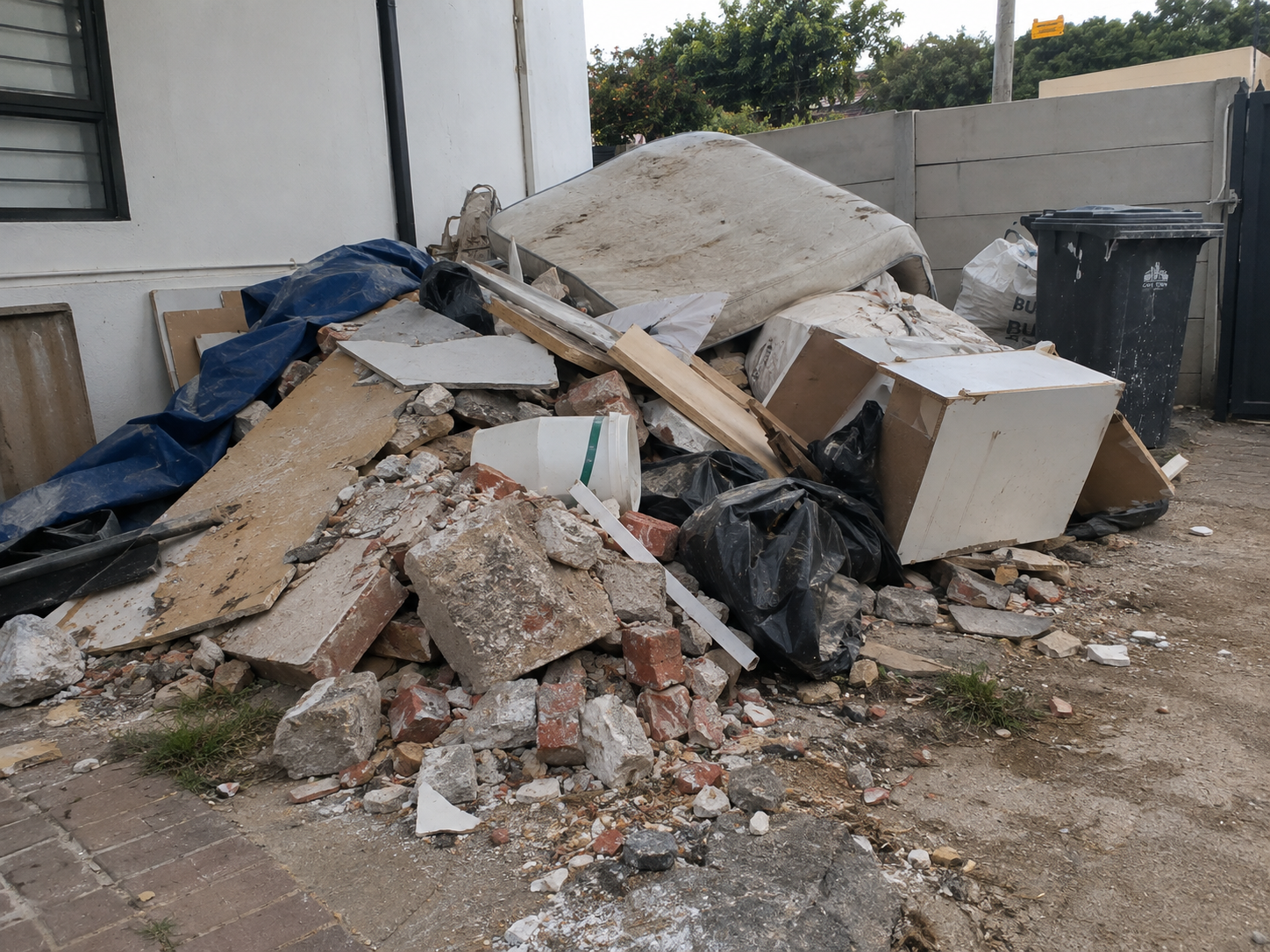
When you have just finished building, renovating, demolishing or clearing a property, it can be tempting to throw everything into one pile and arrange a rubble removal service to take it all away.
But not every type of waste belongs in the same load.
A pile from a renovation might contain broken bricks and concrete alongside timber, plastic packaging, old furniture, electrical items and general household rubbish. Some of these materials can be removed as part of a general clean-up, while others need to be kept separate or handled differently.
Knowing the difference before collection can make the job easier, help you avoid unexpected problems and give you a clearer idea of what service you actually need.
Adriel Rubble Removal handles builders rubble, construction debris, demolition waste and renovation materials, as well as non-hazardous household and commercial waste. The company also provides garden refuse and furniture removal, so not everything has to be forced into one rubble load.
Get Your Rubble Removal Sorted
Request a quote from Adriel Rubble Removal and let the team advise you on the right removal service for your waste.
What Can Go in a Rubble Removal Load?
The simplest way to think about a rubble load is to start with the materials left behind by construction, demolition or renovation work.
Typical builders rubble includes materials such as broken bricks, concrete, cement, plaster, sand and stone. These are the kinds of materials you would expect to see after breaking down a wall, removing paving, demolishing part of a structure or doing other building work.
For example, if you have taken down an old brick wall, the pile might contain hundreds of broken bricks mixed with pieces of mortar and concrete. That is a straightforward rubble removal job.
The same applies to broken concrete from a driveway, old paving from a landscaping project or construction debris left behind after renovation work.
The important thing is to look at what is actually in the pile rather than simply calling everything “rubble.”
Bricks and Concrete
Bricks and concrete are some of the most common materials collected during rubble removal.
A renovation can produce broken bricks when walls are removed or altered. Concrete can come from old slabs, pathways, foundations, steps, driveways or other structures.
These materials are heavy, so the amount you have can affect the vehicle needed for the job.
A small-looking pile of concrete can weigh considerably more than a much larger pile of lightweight household junk. This is one reason it helps to send photographs or give an accurate description when asking for a quotation.
Sand, Stone and Soil
Sand and stone can also form part of a rubble load, particularly when they are left behind by construction or demolition work.
For example, you might have excess sand after building work or a pile of stone left over after removing an old feature from the property.
Soil can also be part of a construction clean-up, particularly where excavation or landscaping has taken place.
However, soil from a garden project is not necessarily the same thing as builders rubble. If your job involves a large amount of garden soil, compost, branches or other organic material, it is worth explaining exactly what needs to be removed when you request a quote.
Plaster and Cement
Renovation work often leaves behind broken plaster, cement and other masonry materials.
Removing an old wall or stripping a room back to its basic structure can leave a mixture of plaster, brick, mortar and concrete.
These materials can usually be dealt with as part of a construction or renovation clean-up, but the more mixed the pile becomes, the more important it is to describe everything that is included.
What About Tiles?
Tiles are one of those materials that often cause confusion.
They come from building and renovation work, but a bathroom or kitchen renovation rarely produces tiles on their own. You may also have adhesive, packaging, old fittings, pipes, timber, glass and other waste mixed into the pile.
If you have a large quantity of broken tiles, mention them when arranging collection rather than assuming they can simply be added to a clean builders rubble load.
A photograph of the pile is particularly useful here.
What Should Not Be Put Into a Clean Rubble Load?
This is where things can get complicated.
A building project can produce many different types of waste, but that does not mean they should all be mixed together.
Materials such as household rubbish, plastic, timber, metal, electrical items and other general waste are different from a straightforward load of bricks and concrete.
That does not automatically mean these items cannot be removed from your property. It means they may be better handled as general waste or through another appropriate service.
Adriel’s waste removal service covers non-hazardous household junk, bulk refuse, rental property clear-outs and commercial waste, while its rubble removal service is specifically aimed at builders rubble, construction debris, demolition waste and renovation materials.
Keeping those categories separate can make the collection much easier.
Clear Out the Whole Job Properly
Get a quote for rubble, waste or junk removal and avoid having different types of unwanted material sitting around after your project.
Household Rubbish
Household rubbish is not the same as builders rubble.
Imagine you have renovated a bedroom and now have a pile containing broken plaster and bricks. Those materials are associated with the building work.
But if the same pile contains old food packaging, household bags, clothing and everyday rubbish, you are dealing with a mixed load.
For a property clean-out, general waste removal may be more appropriate than treating everything as rubble.
This is particularly common when people are clearing a house before moving, preparing a rental property for new tenants or cleaning up after an estate clearance.
Furniture
Old furniture can take up a surprising amount of space during a renovation or property clean-out.
Cupboards, sofas, mattresses, tables and other unwanted items should not simply be treated as building rubble because they happen to be sitting next to the rubble.
Furniture removal is a separate service, and Adriel provides furniture removals for homes, apartments, offices and small commercial spaces.
If you are renovating a property and want an old kitchen cupboard, broken furniture and builders rubble removed at the same time, mention everything when requesting your quote. It is much easier for the removal team to plan the job when they know what is actually being collected.
Garden Waste
Branches, grass cuttings, shrubs and other green waste are also not builders rubble.
They may be generated at the same time as a renovation or landscaping project, but they belong to a different type of waste.
For example, if you have removed a garden wall and cleared several overgrown shrubs at the same time, you may have both rubble and garden refuse on the property.
There is no reason to pretend that the garden waste is rubble. Simply explain that you have both types of material that need to be removed.
Adriel provides garden refuse removal for organic waste such as branches, grass cuttings and landscaping debris.
Wood and Timber
Old timber can come from almost any renovation.
You might remove wooden doors, cupboards, frames, ceiling material, decking or other structures.
Although timber may have come from a building project, it is not the same material as a pile of broken concrete and bricks.
If you have a large amount of timber mixed into your renovation waste, tell the removal company before collection.
This is especially important when you have demolished an entire structure and the waste contains several different materials.
Metal and Scrap
Metal can also appear during building and renovation work.
Old pipes, brackets, framing, fittings and other metal components may be left behind after demolition.
Again, the fact that something came from a building does not automatically make it builders rubble.
Where possible, keep obvious metal items separate from a clean rubble pile. Depending on what you have, some materials may also be suitable for recycling or separate disposal.
Electrical Items and E-Waste
Electrical equipment should not simply be thrown into a rubble pile.
Renovations can produce old lights, electrical equipment, cables, appliances and other items that need different handling.
For example, replacing an old kitchen could leave you with broken cabinets and rubble as well as appliances and electrical components.
Tell the removal company exactly what is involved so the correct arrangement can be made.
Hazardous Materials
Hazardous waste is a completely different category and should never be treated as ordinary rubble.
Examples can include certain chemicals, fuels, solvents, medical waste and other materials that can pose a risk to people or the environment.
Asbestos-containing materials also require particular care and should not simply be broken up and added to a normal rubble pile.
If you suspect that your renovation has produced hazardous material, do not mix it into the general waste or rubble. Get proper advice on how that material needs to be handled.
What About Paint Cans?
Paint is another common item left behind after renovations.
An empty, dry paint container is very different from a container that still contains liquid paint.
Do not assume that containers of leftover paint can simply be thrown into a rubble load. Tell the removal company what you have, especially if there is still liquid inside the containers.
The same principle applies to other liquids, chemicals and substances that could leak into a load.
What About Appliances?
Old fridges, washing machines, ovens and other appliances are common during home renovations and clean-outs.
They are not builders rubble.
If you are renovating a kitchen, for example, you could end up with:
- Broken tiles and concrete
- Old cupboards
- Appliances
- Cardboard packaging
- Plastic
- Timber
- General household waste
Trying to describe all of this as “rubble” does not give the removal team enough information to prepare properly.
Instead, explain that you have a mixed renovation clean-up and list the main types of material involved.
What Happens When Waste Is Mixed?
Mixed loads are not necessarily impossible to remove.
The problem is that the more different materials you put together, the harder it becomes to treat the entire load as clean builders rubble.
A pile containing mostly bricks and concrete is fairly straightforward.
A pile containing bricks, timber, plastic, furniture, garden waste and household rubbish is a different job.
This can also affect the price because the amount of material, loading time and type of waste all influence the work involved.
If you are doing a renovation yourself, separating materials as you go is usually much easier than trying to sort everything once the project is finished.
A Simple Example: Bathroom Renovation
Take a typical bathroom renovation.
You remove the old tiles, break out some plaster, take out a damaged section of wall and replace the fittings.
At the end, you might have:
Builders rubble:
Broken bricks, concrete, plaster and masonry.
Other renovation waste:
Tiles, old fittings, packaging, pipes and possibly timber.
Potential general waste:
Cardboard, plastic packaging and household items.
Rather than putting everything into one pile and hoping it can all be treated as rubble, separate what you can and explain the rest when arranging collection.
That gives the removal company a much clearer picture of the job.
Another Example: Demolishing a Garden Wall
Now imagine you have removed an old garden wall.
The main pile consists of broken bricks, mortar and concrete.
That is a fairly straightforward rubble load.
But perhaps there was also an old wooden gate attached to the wall, some metal brackets and several bags of garden waste from clearing the area.
Those materials can be identified separately.
The wall itself creates the rubble. The gate, metal and garden waste are additional items that may need to be handled differently.
How to Prepare Your Waste Before Collection
You do not need to spend hours perfectly sorting every tiny piece of material.
A little organisation can make a big difference.
Keep obvious rubble together and, where possible, separate large pieces of timber, metal, furniture and garden waste.
If you have hazardous or unusual materials, do not put them into the general pile. Mention them when making your enquiry.
It also helps to keep the waste somewhere the collection team can reach it without having to carry everything through the entire property.
You can also take a few photographs before booking. A photo often tells the removal team much more than “I have a small pile of rubble.”
Does the Type of Waste Affect the Price?
It can.
The amount of waste is obviously important, but the type of material matters too.
A load of heavy concrete is handled differently from a load of lightweight household junk. A large pile of branches takes up a different amount of vehicle space from a similar-sized pile of broken bricks.
Access also makes a difference. A rubble pile sitting beside a driveway is much easier to load than one spread throughout a backyard or several rooms.
Adriel’s own pricing guidance notes that material type, volume and accessibility can all affect the final cost of rubble removal.
That is why giving accurate information upfront is much better than trying to guess the price from the size of the pile alone.
What If You Have Rubble and Junk Together?
This is very common.
A person clearing a garage might have old furniture, broken tools, cardboard, household rubbish and a few bags of rubble.
Someone renovating a house might have bricks and plaster alongside cupboards, appliances and packaging.
You do not necessarily need to arrange several different companies.
Instead, tell the removal team what you have. A company offering both rubble removal and general waste or junk removal can assess the complete job and advise you on the appropriate collection.
Adriel provides both rubble removal and general waste removal, including household junk, bulk refuse and property clear-outs.
What If You Are Not Sure What You Have?
Don’t worry about knowing the official name for every material.
Most homeowners are not expected to know the technical classification of their renovation waste.
Take a few clear photographs and explain what work you have been doing.
For example:
“I demolished a small brick wall and have broken bricks, concrete and some timber.”
Or:
“I renovated a bathroom and have broken tiles, plaster, an old vanity, packaging and general waste.”
That is far more useful than simply saying, “I need rubble removed.”
It allows the removal team to understand what the job actually involves before giving you a quotation.
Final Thoughts
Not everything that comes out of a building or renovation project belongs in a rubble removal load.
Broken bricks, concrete, cement, plaster, sand, stone and similar construction materials are typical examples of builders rubble. Furniture, garden refuse, household junk, timber, electrical items and other materials may need to be handled separately depending on the job.
The good news is that you do not have to figure out every category yourself.
If you have a mixed pile, describe what is there or send photographs when requesting a quote. Adriel Rubble Removal handles rubble removal as well as general waste, garden refuse and furniture removal, so the team can look at the job as a whole rather than expecting you to force everything into one category.
A little separation before collection can also make things easier. Keep clean rubble together, separate obvious junk and other materials where practical, and always flag anything unusual or potentially hazardous before the collection is arranged.
That way, there is less guesswork on collection day and you can get the clean-up finished without unnecessary hassle.
Get Your Waste Cleared
Contact Adriel Rubble Removal for a quote on rubble, junk and general waste removal in Cape Town.