
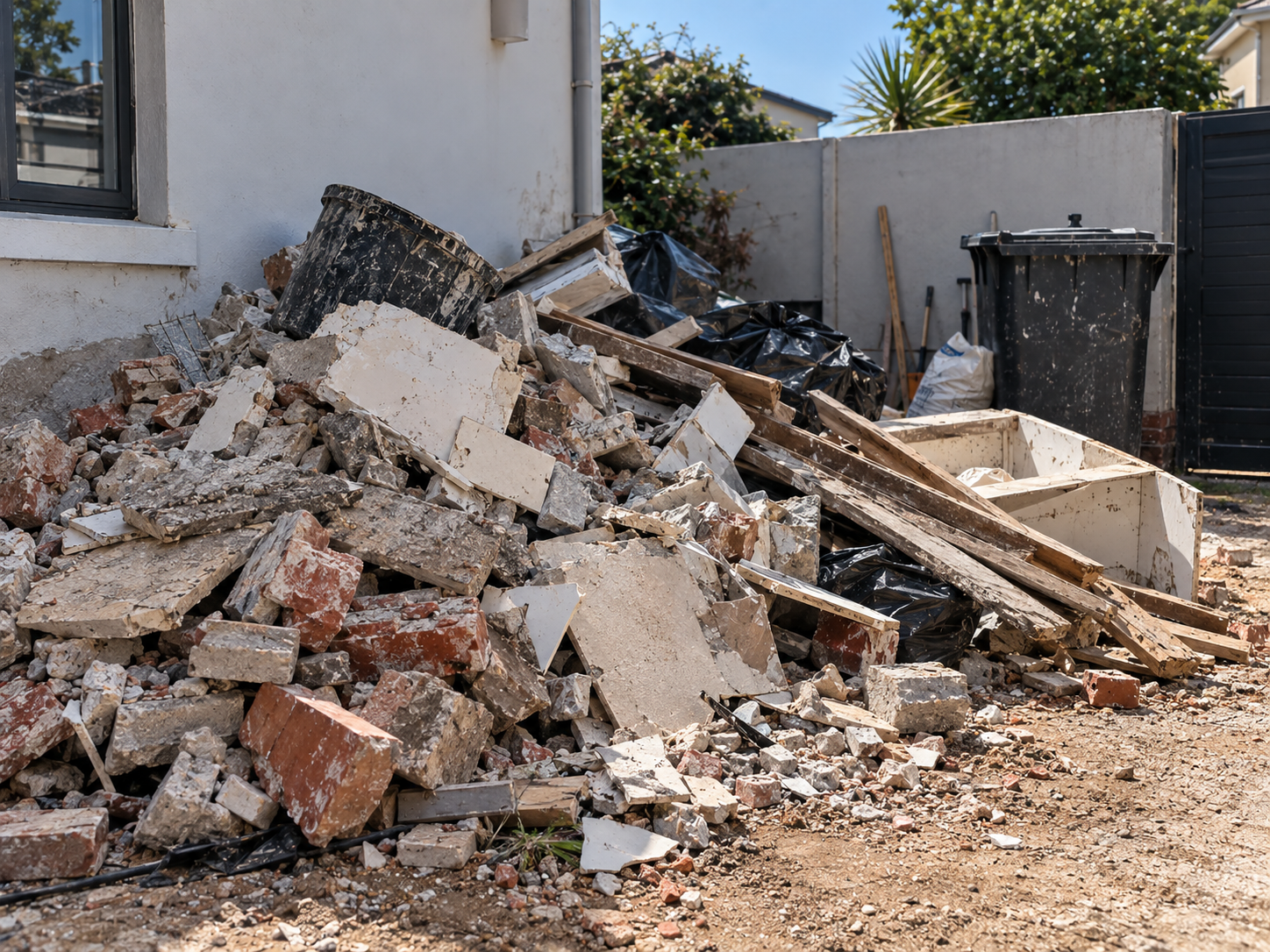
Getting a rubble removal quote is usually one of the first things to sort out when a renovation, demolition or building project starts leaving waste behind. Before the rubble is collected, the removal company needs to have a reasonable idea of what is being removed, how much there is and what the job will involve.
That sounds simple, but rubble removal is not quite as straightforward as charging a fixed amount for every load. A small pile of broken tiles sitting beside a driveway is a very different job from a large quantity of concrete that has been broken up inside a property and needs to be carried out by hand.
The quote therefore has to reflect the actual job.
This is also why giving a removal company a little more information at the beginning can make the quoting process much easier. A few photographs, a description of the rubble and some information about access can give a much clearer picture of what needs to be done.
Get a Clear Rubble Removal Quote
Send the details of your rubble and its location so your removal can be quoted around the actual job.
What Goes Into a Rubble Removal Quote?
A rubble removal quote generally covers the work involved in getting the waste from your property to its appropriate disposal point.
That can include loading, transport and disposal, but the exact details depend on the job and the type of waste involved.
The quote is based on several practical things. The amount of material is one of them, but it is not the only consideration.
A pile of heavy concrete may take up less space than a pile of lightweight renovation waste while still creating a completely different loading and transport requirement. Rubble that has already been placed next to a driveway is also easier to collect than material scattered around the property.
The person preparing the quote is therefore trying to build a picture of the job before the removal takes place.
This is why a proper quote is more useful than simply giving someone a general price for “rubble”.
The Amount of Rubble Matters, But So Does What It Is
When people describe their rubble, they often focus on the size of the pile.
That is useful, but the contents matter too.
A pile made mostly of broken bricks is different from one containing large pieces of reinforced concrete. A renovation clean-up containing plaster, tiles and small pieces of masonry is different again.
There may also be soil, sand or other heavy materials mixed into the load.
This affects the way the removal company looks at the job. The material takes up a certain amount of space, but its weight, shape and how easily it can be loaded also matter.
For example, imagine a homeowner has removed an old brick boundary wall. The bricks have been broken down and stacked in one area of the property. The pile may be relatively compact because the material has been neatly gathered.
Now compare that with a bathroom renovation where broken tiles, pieces of plasterboard, old cement and packaging have been thrown into several different piles around the property.
The second job may look messier and take more time to load even if the total amount of waste is not dramatically different.
That is why describing the contents of the load accurately is important when requesting a quote.
How Much Information Is Needed?
You do not need to measure every piece of rubble or calculate its exact weight.
A useful description can be surprisingly simple.
For example:
“Approximately one small pile of broken bricks and concrete from a demolished wall.”
Or:
“Renovation rubble from a bathroom, mostly tiles, plaster and cement, already piled outside.”
That gives the removal company something to work with.
Photographs make the description even more useful. A wide photograph can show the size of the pile and its surroundings, while a closer photograph can show what the material consists of.
If there are several piles, photograph all of them rather than only sending a picture of the largest one.
The goal is not to produce perfect photographs. It is simply to give an honest representation of the work.
Access Can Change the Job
One of the easiest things to overlook when requesting a rubble removal quote is where the rubble is sitting.
Two properties can have the same amount of waste but require very different amounts of work.
If rubble is piled directly beside a driveway where the removal vehicle can park, loading may be relatively straightforward.
If the same amount of rubble is sitting behind a house, down a narrow passage, the team may need to move it a much greater distance before it can be loaded.
Stairs, narrow gates, long walkways, steep driveways and restricted parking can all make a difference.
This is particularly relevant after renovations because rubble is not always stored in the most convenient place. Builders may leave waste in the area where the work was taking place, which could be at the back of the property or inside a room rather than near the entrance.
When requesting a quote, mention anything that could affect access. It gives the removal company a more realistic picture of the job and reduces the chance of an unexpected problem when the team arrives.
Why Photographs Are Useful When Getting an Estimate
A photograph cannot tell a removal company everything, but it can provide useful information very quickly.
A good photograph can show:
- The approximate size of the pile
- The type of materials involved
- Whether the rubble is loose or contained in bags
- How close the pile is to the driveway
- Whether there are multiple piles
- Whether other types of waste are mixed in
Take the photographs from different angles where possible.
A close-up might show that a pile contains mostly broken bricks, while a wider photograph might reveal that the rubble is actually located at the far end of the property.
This is particularly useful when requesting an initial estimate remotely.
There can still be circumstances where the actual job differs from what is visible in photographs, but better information generally leads to a more useful initial estimate.
What Is the Difference Between an Estimate and a Quote?
The terms are often used loosely, but there is a practical difference.
An estimate is an approximate indication of what the job is likely to cost based on the information available.
A quote is a price given for the work described.
The important thing for the customer is understanding what the figure is based on.
If you have sent photographs and described the rubble, the estimate may be based on what can reasonably be seen from that information.
If the removal company has confirmed the details of the job and provided a specific price for the agreed work, that is a more defined quotation.
If anything about the job changes afterwards, the original figure may need to be reconsidered.
For example, if the original photographs showed one pile of rubble but another large pile is added before collection, the circumstances are no longer the same.
What Should Be Included in a Rubble Removal Quote?
A quote should make it reasonably clear what service you are paying for.
For a typical removal, this may include the collection and loading of the rubble, transportation and disposal.
The exact arrangement can vary, so it is worth making sure you understand what the quoted amount covers.
This becomes especially important when comparing different companies.
A quote of R1,500 from one company and R2,000 from another does not automatically mean that the first option is R500 cheaper in real terms. The two prices may be based on different assumptions about labour, transport, disposal or the amount of material involved.
Before comparing the numbers, compare the work behind them.
A straightforward quote should leave you with a reasonable understanding of what will happen once the removal team arrives.
Labour Is Part of the Job
Rubble does not remove itself.
Someone has to gather it, lift it, carry it and load it into the vehicle.
This can be a significant part of the work, particularly when rubble has been left in different parts of the property.
There is a big difference between loading material that has already been placed neatly beside the vehicle and collecting broken concrete from several rooms or areas.
Heavy materials can also require more physical effort than lightweight renovation waste.
That is why a rubble removal quote should not be viewed as simply paying for the truck to arrive. The service involves the work required to clear the material from the property and transport it away.
The Type of Waste Can Affect the Quote
Not everything left behind after building work is necessarily the same type of waste.
A renovation may produce bricks, concrete, plaster, tiles, timber, packaging and old fixtures all at once.
Some of these materials may be suitable for a rubble load, while others may fall under general waste, garden refuse or another category.
This is one reason it helps to describe mixed waste honestly when requesting a quote.
If you have a pile that contains both builders rubble and household junk, do not describe the entire pile simply as rubble.
A removal company needs to know what is actually being collected.
This also ties into the question of what can and cannot go into a rubble removal load. Separating different waste types before collection can make the job easier and can help ensure that each type of waste is handled appropriately.
A Quote for Clean Rubble Can Be Different From a Mixed Load
Clean rubble generally refers to construction-type materials rather than a mixture of unrelated household waste.
For example, a pile of broken bricks and concrete from a demolished wall is relatively straightforward to identify.
Now imagine that the same pile also contains an old couch, black bags of household rubbish, broken garden branches and an electrical appliance.
That is no longer simply a pile of builders rubble.
The more mixed the load becomes, the more important it is to describe the contents when requesting the quote.
This is an area where customers sometimes underestimate what is actually being removed. A renovation clean-up can easily turn into a combination of rubble removal and general waste removal.
Being clear at the quoting stage means the removal can be planned around the material that is actually there.
Why Your Quote May Be Higher or Lower Than Someone Else’s
There is no single rubble removal price that applies to every property.
Even within Cape Town, the circumstances of each job can be different.
One customer might have a small quantity of heavy material that is easy to access. Another might have a larger quantity of lighter waste spread across a difficult-to-reach property.
The distance involved, the amount of loading required, the type of material and the vehicle needed can all contribute to the final figure.
This is why general pricing information is useful for budgeting but should not be confused with a personalised quote.
A price guide can give you a starting point. A quote is based on the specific removal.
For customers trying to plan their budget, it makes sense to look at estimated rubble removal pricing first and then request a quote once the actual job is clear.
When the Rubble Is Already on the Property
If your rubble is already sitting outside, getting a quote is usually fairly straightforward.
The more organised the pile is, the easier it may be to describe.
You can show where it is located, what materials it contains and roughly how much there is.
If the pile is spread around the property, show all the areas that need clearing.
Do not leave out smaller piles simply because they do not seem significant. Several small piles can add up to a substantial amount of material.
The same applies to rubble stored in bags. Ten bags may sound manageable, but the size and contents of the bags still matter.
A few photographs and a clear description can prevent a lot of guesswork.
When You Are Planning a Renovation
You can also think about rubble removal before the building work starts.
If you know that a bathroom is being stripped, a wall is being demolished or a large area is being renovated, you can plan for the waste from the beginning.
This is particularly useful for larger projects.
Instead of allowing rubble to accumulate randomly throughout the property, you can designate an area for waste where it will be easier to collect later, provided the location is safe and suitable for the project.
It also helps you keep track of how much material is being produced.
A renovation that initially seems small can generate far more waste than expected once tiles, old cement, plaster, bricks and other materials are removed.
Having the removal side organised early means the rubble does not become an afterthought at the end of the project.
Clear Out the Rubble Without the Guesswork
Tell us what needs to be removed, where it is located and what access is available so we can work from the details of the actual job.
What Can Make an Original Estimate Less Accurate?
There are a few common reasons why the final circumstances may differ from the information used for an initial estimate.
The amount of rubble may increase.
Additional waste may be added after the photographs were taken.
The material may turn out to be significantly heavier or more difficult to handle than originally described.
Access may also be different from what was expected.
For example, perhaps the removal vehicle was expected to park close to the pile but cannot get through the property entrance. The team may then need to carry the material a considerable distance.
This is why it is better to update the removal company if something changes before collection.
An estimate is only as useful as the information behind it.
How to Compare Rubble Removal Quotes Properly
If you receive more than one quote, resist the temptation to compare only the final numbers.
Look at what each company is actually offering.
Check whether loading is included. Check whether transport and disposal are included. Look at whether the companies have been given the same information about the amount and type of waste.
If one company has seen photographs of the entire pile and another has only been told that there is “a small load”, the two quotes may not be based on the same job.
The same applies to access.
If one quote is based on rubble sitting next to the driveway while the actual rubble is behind the house, the estimate may not accurately reflect the work required.
A fair comparison starts with giving each company the same information.
How to Avoid Surprises on Collection Day
Most problems with a removal quote can be avoided by being clear before the booking is confirmed.
Show the complete amount of waste.
Mention difficult access.
Explain whether the material is loose or bagged.
Tell the removal company if other waste is mixed with the rubble.
If more material is added after the quote, mention it before collection rather than assuming it will automatically be included.
It is also useful to make sure the vehicle can access the property and that gates or entrances are available when the team arrives.
These are small practical details, but they can make the collection much smoother.
What Happens Once the Quote Is Accepted?
Once the quote has been accepted and the collection has been arranged, the removal company can plan the job around the agreed details.
On collection day, the team needs access to the rubble and enough room to load and remove it.
The rubble is then loaded, transported away and disposed of according to the type of waste and the arrangements for the job.
For the customer, this means the pile that has been taking up space on the property is dealt with without having to organise a trailer, find somewhere to dispose of the material or spend the day moving heavy rubble themselves.
For renovation work, that can also mean getting the property ready for the next stage of the project much sooner.
Getting a Rubble Removal Quote in Cape Town
A good rubble removal quote starts with a good description of the job.
You do not need to know the exact weight of the rubble or calculate the precise volume yourself. What matters is giving enough information for the removal company to understand what needs to be collected.
Show the rubble clearly. Describe the materials. Mention how much there is and where it is located. Explain any access difficulties and point out anything else that is mixed into the load.
From there, the removal company can assess the work involved and provide an estimate or quote based on the information available.
The final price is therefore not simply a number pulled from a standard list. It reflects the particular removal job, including the material, quantity, loading requirements, transport and disposal involved.
For anyone budgeting for a renovation, demolition or building clean-up, understanding this process makes it much easier to plan the removal properly.
And when you are comparing a personalised quote with general rubble removal pricing, keep the two separate. A pricing guide is useful for budgeting, while a quote tells you what your particular job is expected to cost.
Get Your Rubble Removal Quote
Get a clear quote for your rubble removal in Cape Town based on the amount of waste, the materials involved and the practical details of the collection.